

New requirements for lead-free and dezincification resistant copper alloy plumbing products
Check you are using the correct lead-free and dezincification resistant (DZR) copper alloy requirements set out in the Acceptable Solution G12/AS1 Water Supplies when using it to show compliance with the Building Code.
If you are using the G12/AS1 Acceptable Solution to show compliance with the Building Code, make sure you follow the requirements in the correct version. The option to use the requirements in the Amendment 13 version ends on 1 May 2026 (the transition end date).
Acceptable solutions and the 1 May 2026 transition end date
Before the 1 May 2026 transition end date, you could choose to use either Amendment 13 or Amendment 14 of Acceptable Solution G12/AS1 to demonstrate compliance with the Building Code.
G12/AS1 3rd Edition Amendment 13 cannot be used from 2 May 2026.
G12/AS1 3rd Edition Amendment 14 – can be used before or after 2 May 2026 – and holds new lead-free and DZR copper alloy requirements. From 2 May 2026, Amendment 14 becomes the only MBIE acceptable solution for Clause G12.
New lead-free and DZR copper alloy requirements and the Amendment 14 Acceptable Solution
Amendment 14 to the Acceptable Solution introduces new requirements for plumbing products that must be met from 2 May 2026:
- Maximum lead content: Any copper alloy product used in contact with drinking water must contain no more than 0.25% lead. This includes pipe fittings, valves, taps, mixers, water heaters and water meters.
- DZR copper alloy requirement: Any copper alloy component that is in contact with drinking water and subject to hydrostatic pressure must be made from dezincification-resistant (DZR) copper alloy.
Dezincification is a corrosion process where a copper alloy undergoes selective leaching of the zinc into the water supply, leaving only a porous copper residue. Particular types of copper alloy can be used for manufacturing plumbing products which give resistance to dezincification corrosion.
Revoking the Amendment 13 Acceptable Solution
The Amendment 13 Acceptable Solution will be revoked at 11:59pm on 1 May 2026.
- It can still be used to demonstrate compliance for building consent applications submitted on or before 1 May 2026.
- From 2 May 2026, Amendment 13 will no longer be an Acceptable Solution to be used to demonstrate compliance.
Lead-free and DZR plumbing products
As part of the 2022 Building Code update consultation, the Ministry of Business, Innovation and Employment (MBIE) proposed to limit the allowable lead content in plumbing products which contain copper alloys and are intended for use in contact with potable water.
This consultation also proposed clarifying that copper alloy water supply system components must be dezincification resistant to reduce the risk of corrosion. Following high levels of support, MBIE decided to proceed with the proposed changes to Acceptable Solution G12/AS1.
Transition period extensions
In April 2024, MBIE consulted on extending the transition period end dates for both the lead and dezincification plumbing product provisions in New Zealand. Due to the positive response to the proposed changes, MBIE announced that the transition period ends on 1 May 2026, with the proposed changes taking effect from 2 May 2026.
Read more about the Building Code update consultation outcomes.
Building consent applications and the 1 May 2026 transition end date
The 1 May 2026 transition end date is the last day that would allow you to use the requirements in the Amendment 13 acceptable solution.
The information below explains how the transition end date should be applied.
Consents granted before the 1 May 2026 transition end date
For building consents granted by a building consent authority (BCA) on or before 1 May 2026 (including consented projects under construction), the building work may proceed using the acceptable solution provisions that were approved by the building consent. It does not need to meet the new lead-free requirements set out in the Amendment 14 acceptable solution.
Consent applications made before the transition period end date
Building consent applications made on, or before 1 May 2026 may continue to comply with the G12/AS1 Amendment 13 provisions that were in place on the date of consent application.
Consent applications made after the transition period end date
Building consent applications made on or after 2 May 2026 must follow the updated provisions set out in the Amendment 14 acceptable solution to demonstrate compliance.
Building work that does not require a consent
For work not requiring a consent it is recommended to comply with an MBIE approved solution, such as G12/AS1 Amendment 14 to demonstrate compliance with the Building Code.
For replacement or repair of existing plumbing products a comparable product may be selected. The product must meet the building code of the time, at installation. If using G12/AS1 from 2 May 2026 it must meet Amendment 14 requirements for lead-free and DZR.
Plumbers and building practitioners are responsible for ensuring the following are compliant with the Building Code:
- all plumbing works
- all plumbing products
- all plumbing methods.
Lead-free and DZR for designers and trades people (plumbers)
Consented building work (including plumbing works) being carried out after the 1 May 2026 transition date, will continue to be subject to the conditions, plans, and specifications within the building consent granted by the relevant building consent authority.
Onsite construction and installation work must follow the specifications in the building consent for a code of compliance certificate to be issued.
Building work done without a building consent must still meet the Building Code as required by the Building Act 2004. Practitioners may choose to use an MBIE Acceptable Solution, such as G12/AS1 3rd Edition Amendment 14, however this is not the only way to demonstrate compliance.
From 2 May 2026, if you are choosing to use the G12/AS1 3rd Acceptable Solution in a building consent application, you can only use Amendment 14. Plumbing professionals are responsible for ensuring the building work (which includes plumbing work), and all building products and building methods (including plumbing products and plumbing installation methods) complies with the Building Code.
Getting ready for the 1 May 2026 transition end date for Amendment 13
- Be aware that Amendment 13 will no longer be an acceptable solution from 2 May 2026.
- Start planning to use leadfree, ≤0.25% copper alloy products as a standard specification for drinking water.
- Be aware of exemptions, for example, non-potable water supply or irrigation.
- Ensure product selections, documentation, and consent applications reflect Amendment 14 requirements.
- Discuss product availability and certification with suppliers ahead of the change.
Your compliance checklist
- Use lead-free copper alloy components for potable water systems.
- Ensure products under pressure are dezincification resistant.
- Avoid high-temperature brazing that reduces corrosion resistance.
- Confirm products are tested to:
- NSF/ANSI/CAN 372:2020 (lead-free)
- AS 2345:2006 (dezincification resistance)
- Verify IANZ-accredited test certificates or equivalent international certification (for example, WaterMark).
Lead-free and DZR for homeowners
- Things to be aware of as a homeowner when renovating or installing new plumbing products. Ask your plumber or retailer for proof of compliance.
- This can be product documentation or certificates.
- Ensure taps, mixers, valves, and water heaters meet the new standards.
- Look for LF (lead-free) and DR (DZR compliance) on the product.
These changes give homeowners greater confidence that water from the tap is safe and healthy.
Lead-free and DZR for retailers and manufacturers
- Ensure all products in contact with potable water meet:
- NSF/ANSI/CAN 372:2020 (lead-free)
- AS 2345:2006 (dezincification resistance)
- Provide IANZ-accredited test certificates or equivalent international certification.
- Update product information and labelling to reflect compliance.
- Retailers and manufacturers are expected to phase out any products that do not meet lead-free and dezincification resistant requirements.
Building consent application for BCAs
Check that consent applications include:
- Building Product Specifications
- Evidence of certification to recognised standards.
Plumbing products covered by the lead-free provision
Examples of products the lead in plumbing product provision will apply to include:
- copper alloy fittings
- stainless-steel braided hoses
- valves (such as valves for isolation, backflow prevention, alteration of pressure and temperature)
- taps and mixers
- water meters
- pumps (for use with cold and hot water supply systems)
- water heaters
- hose tap (when used with drinking water supply)
- residential water filtration equipment
- water dispensers (such as boiling and cooling units, drinking fountains and bottle fillers)
- fire sprinkler systems that are connected to cold water supply systems and are not isolated from fixtures and fittings intended to supply water for human consumption.
Plumbing products not covered in the Amendment 14 provisions
Examples of products the lead in plumbing product provision will not apply to include:
- showers and baths for bathing, including shower and bath mixers
- emergency showers, eye wash and/or face wash equipment
- pumps used for irrigation, fire-fighting or other non-potable water purposes
- fire-fighting water services and equipment
- appliances, including clothes washing machines and dishwashers
- commercial boilers associated with heating, ventilation and air-conditioning systems
- sanitary fixtures (such as toilets, cistern inlet valves, bidets, urinals)
- non-potable water systems (such as recycled water systems)
- products used exclusively for non-potable uses such as manufacturing, industrial processing, irrigation or any other uses where the water is not anticipated to be used for human consumption.
Dezincification resistance in plumbing products
Dezincification can occur when a copper alloy (such as brass) containing more than 15% zinc comes into contact with natural or treated waters causing link to leach into drinking water.
The Amendment 14 acceptable solution dezincification resistant copper alloy provision does not apply to water supply system components that are not subject to hydrostatic pressure, such as shower heads and bath spouts which are open at one end.
Brazing brass fittings
Brazing can affect the dezincification resistance of brass fittings. Plumbers should avoid localized ‘hot spots’ and perform brazing operations at as low a temperature as is practicable when brazing brass fittings.
Installing dezincification resistant brass water supply system components protects both consumers and plumbers by ensuring these products are sufficiently durable, particularly where these products are installed behind the wall or in concealed locations.
How to identify products compliant with Amendment 14
There are a number of ways in which products that comply with the new lead in plumbing product provision may be identified:
- Building product information requirements – These regulations place obligations on New Zealand-based building product manufacturers, importers, retailers and distributers to state how their product complies with the relevant Building Code clause. Building product information should clearly state how an in-scope plumbing product is expected to contribute to compliance with Building Code clause G12.3.2 (c).
Building product information requirements - International product certification scheme markings – International product certification scheme markings can indicate compliance with equivalent requirements in other countries.
-
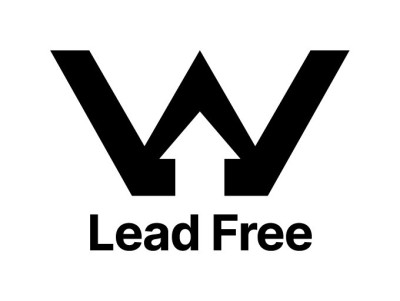
- The Australian Lead Free WaterMark trademark
-
- American National Standards Institute (ANSI) accredited third-party certification body lead-free certification marks – How to Identify Lead-Free Certification Marks for Drinking Water System and Plumbing Materials [PDF 5.8MB] – nepis.epa.gov
- NSF/ANSI/CAN 372:2020 test report – A test report provided by a test facility with International Accreditation New Zealand (IANZ) or equivalent accreditation in accordance with NSF/ANSI/CAN 372 which verifies that a product has the required weighted average lead content of ≤ 0.25%.
NSF/ANSI/CAN 372:2020 ‘Drinking Water System Components – Lead Content’ is an American National Standard that establishes a standardised methodology for the determination and verification of product compliance to minimise lead contaminants. This standard serves as the basis to establish conformance with the G12/AS1 lead in plumbing product provision.
There are a number of ways in which products that comply with the dezincification resistance provision may be identified:
- Building product information requirements – These regulations place obligations on New Zealand-based building product manufacturers, importers, retailers and distributers to state how their product complies with the relevant Building Code clause. Building product information should clearly state how an in-scope plumbing product is expected to contribute to compliance with Building Code clause G12.3.2 (c) and B2.3.1.
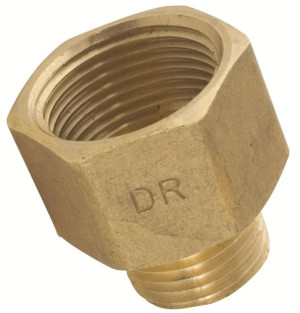
Building product information requirements - ‘DR’ identification marking – Copper alloy water supply system components marked with the letters ‘DR’ indicates compliance with the dezincification resistance provision.
- AS 2345:2006 test report – A test report provided by a test facility with IANZ or equivalent accreditation in accordance with AS 2345 which verifies compliance with this standard.
Report concerns about drinking water
If you have concerns about your drinking water, contact your drinking water supplier. The Water Services Authority - Taumata Arowai has more information on their website.
Report a concern or compliant – taumataarowai.govt.nz